“Why buy a house when I can build exactly what I want for less?”
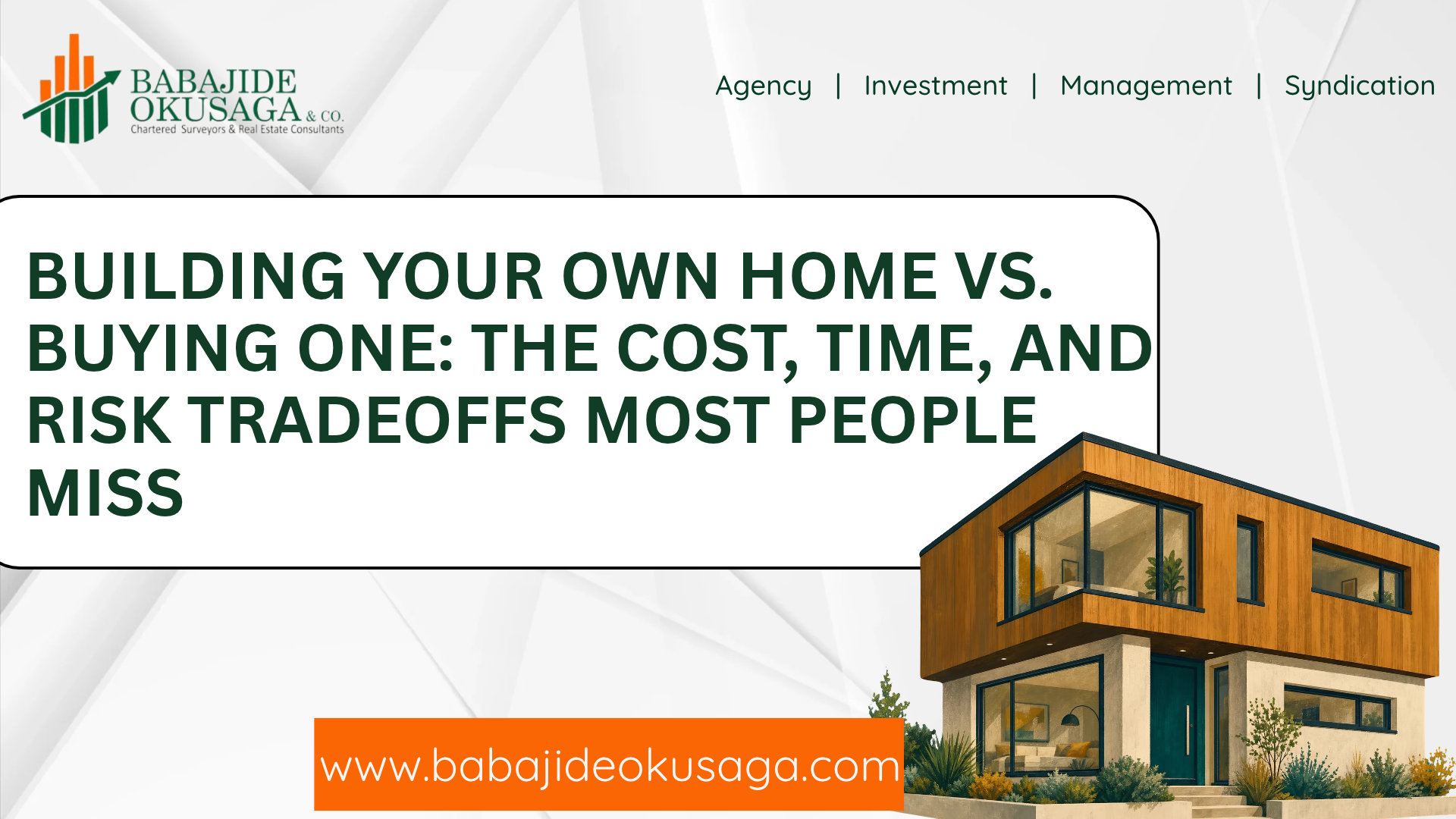
It is one of the most common questions in Nigerian real estate, and it sounds logical. You buy the land, you design the house, you control the quality, and you avoid the developer’s profit margin. Sometimes that works out beautifully. Often, though, the plan that looked cheaper on paper becomes slower, costlier, and more stressful than expected.
Neither route is automatically better. This article looks at what each option really involves, including the tradeoffs people tend to overlook until they are already deep into the process.
THE CASE FOR BUILDING
Building has real strengths:
- Customisation. You decide the layout, size, finishing, and features.
- Control over quality. You choose the materials and the professionals.
- Phased spending. You can build in stages as funds allow.
- Potential value gain. Land and a completed building can both appreciate, and a well-built home may be worth more than what you spent.
- Suitability. A design that fits your family, climate, and lifestyle can be hard to find ready-made.
THE CASE FOR BUYING
Buying also has real strengths:
- Speed. You can move in, or start earning rent, much sooner.
- Cost clarity. The price is mostly known upfront, so there are fewer surprises.
- Less hands-on effort. You avoid managing contractors, suppliers, and approvals.
- Easier assessment. You can inspect what you are buying, including finishing quality and neighbourhood.
- Easier financing. Some buyers find it simpler to arrange payment plans or mortgage options for a completed or off-plan property than to fund an open-ended build.
THE COSTS MOST PEOPLE MISS
- Building costs are rarely just the building. Beyond construction, budget for the survey, architectural and engineering drawings, approvals, site preparation, perimeter fencing, borehole, power connection, drainage, and landscaping. Many first-time builders only budget for the structure.
- Material prices move. Cement, iron rods, roofing, tiles, and fittings can change in price while your project is under way. A budget fixed at the start may not hold by the finishing stage.
- Labour and professional fees. Good professionals cost money, and cutting corners here is risky. Poor workmanship creates repair bills later.
- Delays cost money. Every month of delay can mean more rent paid elsewhere, higher material prices, and idle capital.
- The cost of finishing. Many builds stall at lintel or roofing level because funds ran out. An unfinished building is not a home and often not an investment either.
- Hidden costs of buying. If you buy, remember legal fees, agency fees, survey, stamp duty, registration, and possible upgrades or repairs on the property.
THE TIME TRADEOFF
Time is where many people misjudge the choice.
Building typically involves buying and verifying land, preparing designs, securing approvals, mobilising contractors, constructing, and finishing. Delays at any stage can stretch the timeline well beyond what was planned.
Buying a ready property can shrink that time dramatically. Buying off-plan sits in between: you may pay earlier at a lower price, but you wait for delivery.
The question to ask is not only “Which is cheaper?” but “What does each extra year cost me in rent, price changes, and lost use of the property?”
THE RISKS MOST PEOPLE MISS
If you build:
- Land risk comes first. If the plot has a weak title, an acquisition issue, or encroachment problems, everything you build on it is at risk. Verify the title documents, such as the C of O, Deed of Assignment, or Governor’s Consent, and search the records before you spend on construction.
- Approval risk. Building without the required planning and building approvals can lead to stoppage or demolition. Confirm what permits you need before you break ground.
- Contractor risk. Poor workmanship, abandoned sites, and cost overruns are common stories. Use verifiable professionals and written agreements.
- Structural risk. Weak foundations, poor materials, or unqualified workers can create expensive and dangerous problems. Engage registered professionals and have the work supervised.
- Funding risk. Running out of money mid-project is one of the biggest dangers.
- Security and site risk. Materials theft and disputes with “area boys” or neighbours can slow or stop a project.
If you buy:
- Title risk. The seller may not be the true owner, or the property may have undisclosed claims. Verify documents and use your own lawyer.
- Quality risk. A property may look good but hide structural or finishing defects. Inspect it, ideally with a qualified professional.
- Developer risk. For off-plan purchases, delays or non-delivery are real risks. Check the developer’s track record and completed projects.
- Overpayment risk. Hype and pressure can push buyers to pay above fair value. Compare similar properties first.
- Limited flexibility. You get what exists, which may not fit your needs exactly.
A SIMPLE ILLUSTRATION
The figures below are for illustration only and are not quotes.
Imagine a buyer weighing a ready-built home at N90 million against building a similar one.
The buyer who builds plans a budget of N70 million: N25 million for land and N45 million for construction. It looks like a saving of N20 million. But during the project, material prices rise, approvals and professional fees add up, the build takes much longer than planned, and rent keeps going out during the wait. Costs climb toward N85 million, and the home is finished a year later than expected.
The saving shrinks, and so does the margin for error.
Now imagine the same builder who verified the land, secured approvals early, hired registered professionals, used a written contract, kept a contingency fund, and built in clear phases. They may well finish at or under budget, with a home designed exactly to their needs.
The same route can lead to very different results. What decides it is preparation.
A SIDE-BY-SIDE VIEW
Cost: Building can cost less but is less predictable. Buying costs more upfront but is clearer.
Time: Building is slower and uncertain. Buying is faster.
Control: Building gives you high control. Buying gives you limited control.
Effort: Building demands heavy involvement. Buying demands less.
Risk: Building carries construction, funding, and approval risk. Buying carries title, quality, and developer risk.
Best for: Building suits patient, well-funded buyers with time and a clear plan. Buying suits those who need speed, certainty, or a lower workload.
HOW TO DECIDE
Ask yourself these questions honestly:
- How soon do I need to move in or start earning rent?
- Do I have the full budget, including a buffer, or only part of it?
- Do I have the time and the trusted people to oversee a build?
- Do I need a specific design, or would a ready-made home do?
- What is the real total cost of each option, including rent paid while waiting?
- Have I verified the land or the property title?
If you are unsure, a middle path may work: buy a smaller or ready property now and build later, or buy land first and build in phases once funds are secure.
IF YOU CHOOSE TO BUILD: PROTECT YOURSELF
- Verify the land before spending anything on construction.
- Obtain the necessary planning and building approvals.
- Hire registered, verifiable professionals, and use written contracts.
- Set a realistic budget with a contingency, commonly 10 to 20 percent, for price changes and surprises.
- Build in clear stages and pay against completed work, not in advance.
- Supervise the site regularly, or appoint a qualified person to do so.
- Keep records of every payment and agreement.
IF YOU CHOOSE TO BUY: PROTECT YOURSELF
- Verify the title documents and search them at the Lagos Land Registry.
- Inspect the property, ideally with an engineer or other qualified professional.
- Compare prices of similar properties in the area.
- Check the developer’s record for off-plan purchases.
- Understand the full cost, including legal fees, stamp duty, and registration.
- Get your own lawyer to review the agreement before you pay.
Conclusion:
Building is not automatically cheaper, and buying is not automatically easier. Building rewards preparation, patience, and a well-funded plan. Buying rewards speed, certainty, and careful verification.
The wrong choice is the one you make for the wrong reasons: because it looks cheaper on paper, or because someone else did it that way.
Count the full cost, respect the time, and understand the risks. Then choose the route that fits your finances, your timeline, and your goals.
At Babajide Okusaga & Co., we help clients assess land, verify titles, and compare their options, so they build or buy with confidence.
Weighing your options? Speak with us before you commit.
…
Babajide Okusaga & co are Chartered Surveyors and Real Estate Consultants with expertise in Agency, Investment, Management, and Syndication (AIMS). We are known for being client-focused and results-driven, aiming to connect clients with their specific real estate needs such as sales, letting, joint ventures, and partnerships.
We dedicate time and energy to ensure clients’ satisfaction by helping them find the best-suited real estate solutions. Whether it’s leasing office space, financing a first home, purchasing a new factory, or managing an investment portfolio, Babajide Okusaga & Company caters to the considerations of corporate entities, individuals, and High Net Worth Individuals (HNIs).
2025RealEstateOutlook #NigerianPropertyMarket #AffordableHousingNigeria RealEstateInvestmentNigeria #PropertyValueAppreciation #NigerianHousingMarket